
An increase in Machine Games Duty (MGD) will leave many of the UK’s social clubs struggling to pay their bills, triggering a damaging cycle of reduced investment and rising prices for members.
That is the stark warning from Chris Haley, Group Chairman of Dransfields, the largest British-owned supplier of gaming machines and entertainment products, who believes that the proposed tax hike threatens the very existence of many of the country’s circa 5,000 social clubs.
Haley, a three-decade veteran of the sector, confirmed: “Clubs exist at the heart of their communities and are owned by the members for the benefit of the members. Many operate on wafer thin margins with low or no cash reserves. Unfortunately, it doesn’t take much for a club to go into a downward spiral, members will vote with their feet and go elsewhere if prices rise or if the club curtails entertainment and investment in the fabric of the club.”
Devastating For The Community
He pointed out that massive uplifts in utility bills, staff costs, business rates, and bar stock have already forced an increasing number of clubs to open only at weekends, adding that “an increase in MGD will be hard for them to absorb.”
Dransfields has been consulting with the sector’s trade and representative bodies to highlight the potential tax hike. The feedback, Haley noted, underscores the incredibly harsh trading environment clubs currently face.
“There’s been a real sense of fear and trepidation,” he said. “There are not many options for clubs to make further cutbacks to compensate for an increase in tax and there is a real danger that some clubs will not be able to afford the rise and simply close.”
Taking a broader perspective, he argued: “The effect that a club closure has on a local community can be devastating, especially amongst the older generation who tend to use clubs more, and rely on them for social interactions.”
An Anti-Gambling Agenda
Haley is clear about what he believes is driving Prime Minister Andy Burnham’s assault on the gaming sector.
“Personally, it feels like an anti-gambling agenda,” he stated. “I recognise that the Government needs to raise revenue but if businesses are forced to close then revenue could actually reduce.
“It doesn’t seem sensible or desirable to penalise social clubs that time and again punch above their weight in terms of what they provide to their local community.
“To lose all those games of bingo that help ease loneliness, all the sports teams supported by their club, the funeral teas, the family parties, the community events, the charitable fund raising: the list goes on. In terms of authentic lived experience, I spoke to one of my club customers who said that their gaming machine income pays for the upkeep of their cricket pitch, bowling green and football pitch and these facilities are the bedrock of the local community and used by all generations.”
Politicians Must Recognise The Importance Of Clubs
Despite the current political agenda, members’ clubs still hold a significant lobby within the House of Commons, stretching right to the top of Government.
“Fortunately, local MPs do tend to understand and have been very supportive of their local clubs over the years,” Haley said. “MPs recognise the importance of clubs in their local community and are often members themselves. They use them to host surgeries and I dare say like their constituents – have a pint or two to relax!
“Indeed, Andy Burnham based his Makerfield election campaign from Stubshaw Cross Community and Sports Centre. The club famously remained fully open to its local regulars throughout the political campaign.
A Financial Lifeline
It continued hosting community events including a wedding, a funeral, a christening, and a birthday party, while serving as the operations base where high-profile MPs and Cabinet ministers gathered.”
For Haley, this challenge is the latest in a long-term fight to protect a vital community asset. “I have fought on behalf of clubs over so many issues related to machines right back to the Budd Report. Throughout my time in the sector gaming machines have been recognised for being the most profitable four-square feet of a Club.
Machine income represents a financial lifeline for clubs: to cut that away and threaten the very existence of invaluable community assets would be both sad and shameful.”
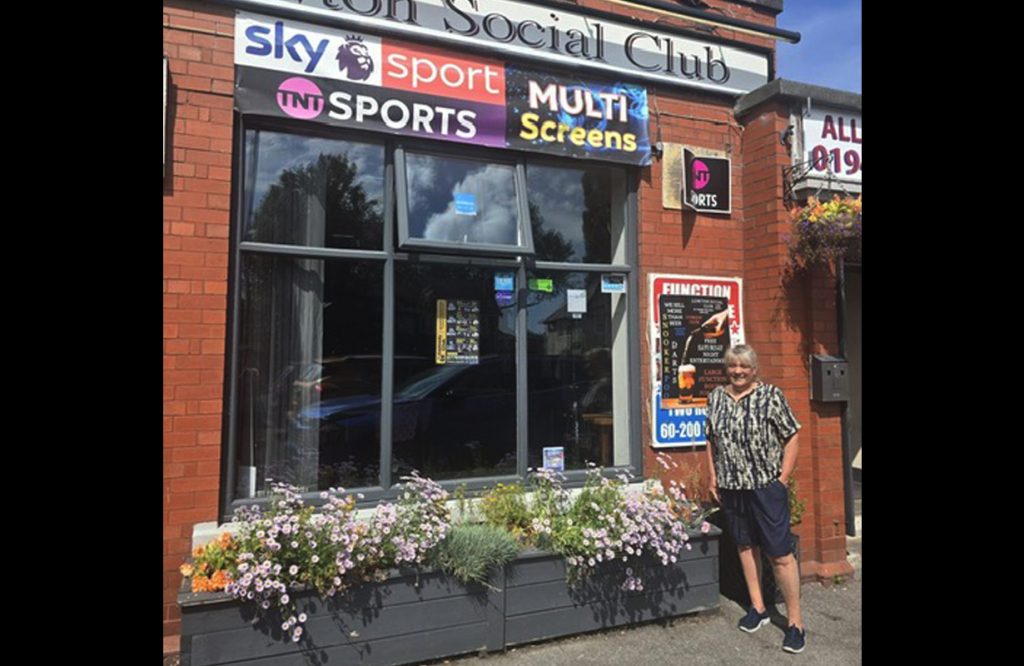
Sally Walker, Club Secretary and Club Treasurer Lowton Social Club
“Lowton Social Club is a not-for-profit organisation that was formed in 1956 and now has 380 members, 60 percent of whom are pensioners. The club is in the heart of the community and relies on our loyal members and volunteers to keep the doors open. All of our gaming profits are used to contribute towards our free to use community facilities. These include a darts academy for adults and children – some of whom have additional needs – youth boxing through to afternoon dance sessions for senior citizens.
“Clubs and pubs have never really recovered since Covid and it has become incredibly difficult to run the club and to make ends meet. In the last three years our outgoings have jumped from £1,500 to £4,000 per month and that excludes the cost of beer, entertainment and wages. To cover that we have to sell £8,000 of beer. If gaming duty increases, we will have to reduce some of our youth and pensioners activities. We can’t just absorb price increases and continue to provide the facilities for free. Regarding jobs, we now employ two fewer staff and have reduced opening hours to reduce the wage bill. We were forced to increase prices by 20 percent this year – I don’t think our members could or would stomach any further increases.”
Ken Green, General Secretary, Working Men’s Club and Institute Union (CIU)
“An increase in MGD could well see clubs having to cease trading – after all MGD was introduced to be tax neutral. The fact is that in a lot of clubs gaming machine income represents the thin line between surplus and loss. Clubs provide a huge range of invaluable community services and the more that cease trading the greater the demand on local authorities to provide the missing recreational facilities – a cost that they would have to foot. The All-Party Parliamentary Group for Non-Profit Making Members’ Clubs and affiliated MPs need to know that an increase in MGD will sound the death knell for some clubs.”
Charles Littlewood, Chief Executive, Association of Conservative Clubs Ltd and Chair of CORCA
“We are very concerned about the potential impact of any significant increase in Machine Games Duty on Members’ Clubs. We will be highlighting these concerns in the appropriate places and making clear to Government and Parliamentarians the consequences that an increase could have for the club sector.
Clubs continue to face significant financial pressures, including increased employment, energy and other operating costs. An additional tax burden on an important source of club income would therefore come at a particularly difficult time. Gaming machine income helps clubs meet their day-to-day operating costs and support the wider facilities and activities that they provide for their members and local communities. It should not be regarded simply as additional or discretionary income. It forms an important part of the income required to keep the doors open and, in some cases, is crucial to their ongoing financial viability
Where gaming machine income represents an important part of a club’s finances, the loss of that income could require committees to review opening hours, staffing levels, services and other expenditure. For clubs already operating on very tight margins, it could ultimately lead them to consider whether their existing operations remain financially sustainable.
Members’ Clubs make an enormous contribution to the communities they serve. They provide affordable, safe and welcoming social spaces, often in areas where other community facilities and hospitality venues have disappeared.
Many clubs provide rooms and facilities free of charge, or at heavily subsidised rates, to local charities, voluntary organisations, sports teams, community groups and other local organisations. They provide employment, support local suppliers, raise substantial sums for charities and provide an important venue for social events and community activities. They also play a less easily quantified but equally important role in tackling social isolation and providing somewhere for people to meet and maintain friendships.
It is therefore important that the impact of any increase in Machine Games Duty is considered in this wider context. Reducing the income available to clubs does not simply affect the provision of gaming machines. It reduces the resources available to organisations which are often providing valuable community facilities at little or no cost to the public purse.”