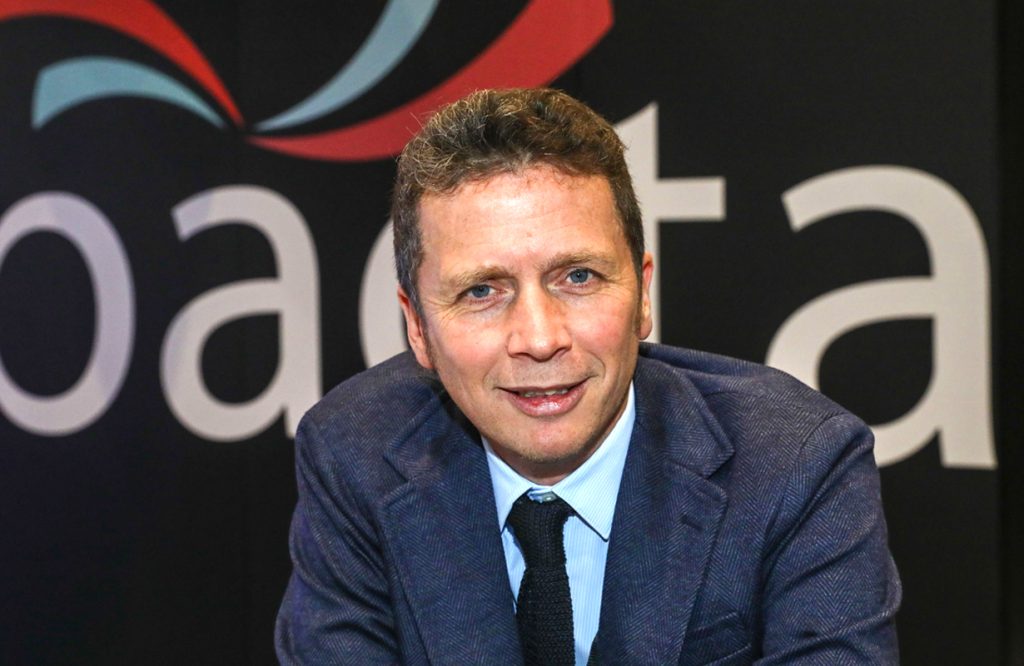

President Joseph Cullis outlines Bacta’s presence at Reform UK’s Party Conference in Birmingham
Can you start by outlining what the Reform UK conference comprised, what events you attended, who you met and how the industry’s arguments landed?
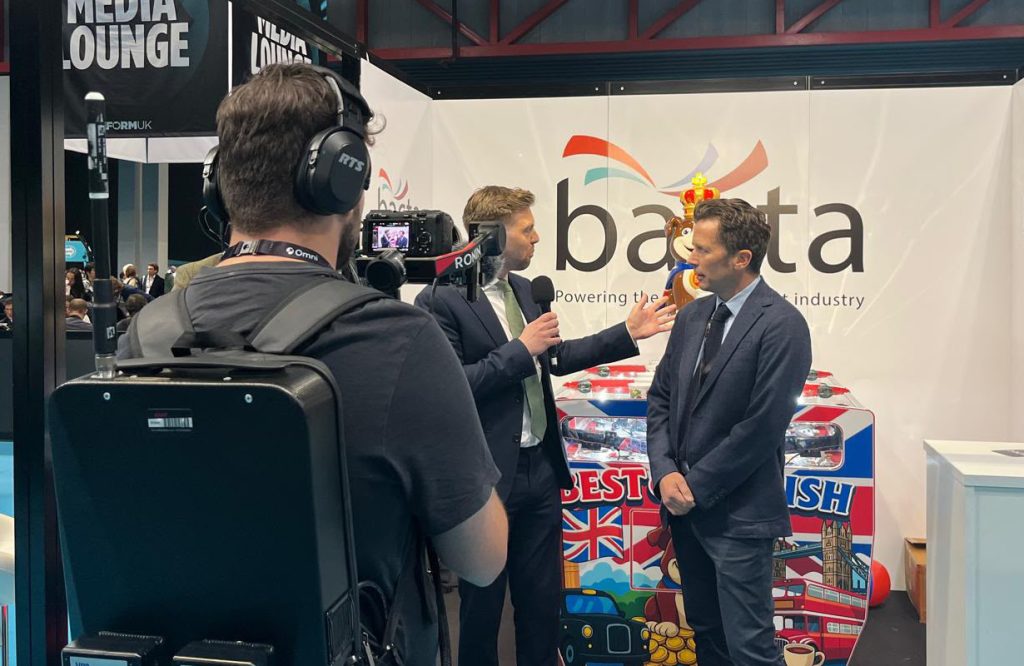
Joseph Cullis: Bacta attended the conference with a team comprising myself, our Director of Communications Allaster Gair, Head of Compliance Simon Bradbury, Novomatic Group Counsel and Vice Chair of the Gaming Council Elizabeth Speed, and Policy Associate Will Lawrence. We had a dedicated exhibition stand featuring a penny pusher, kindly supplied by Bacta member Cosmic Leisure, which proved to be a real success.
The machine gave people an immediate and recognisable connection to our industry. It also helped us begin conversations about the much broader economic and social contribution made by Bacta members, from family entertainment centres and adult gaming centres to manufacturers and the businesses supplying machines to pubs and clubs.
We spoke to parliamentarians, elected representatives, councillors, prospective candidates, journalists and other conference attendees. I also had the pleasure of attending a dinner hosted by Novomatic UK with a number of Reform elected representatives. The discussions covered the contribution our members make to high streets, coastal communities and local employment, as well as the significant challenges facing the sector.
In particular, we raised the proposed removal of the “aim to permit” principle, the tax burden facing operators and the importance of maintaining a regulatory environment in which responsible, licensed businesses can continue to invest.
Our arguments landed really well. There appeared to be a genuine understanding that the industry is composed largely of SMEs and family businesses, many of which have been part of their communities for generations. We now have a considerable number of follow-up conversations to pursue, which is ultimately the measure of whether attending a conference has been worthwhile.
From what you saw at Conference, do you feel that the business community is taking the prospect of a Reform UK government seriously? Is that support more concentrated among SMEs?
There is certainly a sense that the business community is taking Reform seriously as a political force. The party may have experienced some movement in the polls, but it remains a significant player and it would be complacent for any national trade association to ignore it.
The interest did appear particularly strong among SMEs and owner-operated businesses. Many of those businesses feel that the pressures they face are not always fully understood in Westminster. They are dealing with higher employment costs, energy prices, business rates and taxation, while also navigating increasingly complex regulation.
That is especially relevant to our members. They cannot simply increase prices to absorb additional costs because stakes and prizes are set in law. Political parties need to understand that decisions on taxation and regulation have direct consequences for investment, employment and the viability of local businesses.
Reform representatives have previously been willing to listen to the concerns of our sector, and we want to continue building that constructive relationship.
Do you think Bacta has greater credibility with Reform because it has such a prominent member business in Nigel Farage’s constituency?
Having a prominent Bacta member operating in Clacton undoubtedly helps to demonstrate the industry’s local contribution in a very tangible way. It means discussions are not taking place in the abstract. Nigel Farage can see directly the jobs, investment and entertainment that a responsible local operator provides within his constituency.
That has helped us to engage with him directly in Clacton and explain both the value of the industry and the pressures it faces.
However, our wider credibility comes from the fact that this story is replicated across the country. Bacta represents a broad range of businesses, from intergenerational family SMEs rooted in their communities to major international brands. Our task is to connect national policy decisions with those real businesses, employees and communities.
How professional was the Conference – were you impressed?
The conference had a professional feel and was clearly attended by people who believe the party has a serious role to play in national politics.
As is often the case at a major political conference, some of the policy discussion was overtaken by the media events surrounding it. Nevertheless, we found a genuine willingness among delegates to engage with us and understand our members’ concerns.
Our stand was extremely popular. The penny pusher attracted a steady stream of visitors and created a great way to introduce people to the industry. It was encouraging to see something so closely associated with the traditional British seaside generating interest and opening the door to substantive policy discussions.
For Bacta, the conference was worthwhile because it allowed us to establish new relationships and strengthen existing ones.
What were the main outcomes from attending and will you put Bacta members in front of Reform candidates before a general election?
The immediate outcome is a strong programme of follow-up engagement with the politicians, candidates, councillors, journalists and other stakeholders we met.
Political relationships are most effective when they are grounded in first-hand experience. We therefore want representatives from all parties to visit Bacta member businesses, meet the people employed there and understand how policy decisions affect operators in practice.
Where appropriate, we will look to connect Bacta members with Reform candidates and representatives in their local areas. That is not about endorsing any political party. Rather, it is part of our responsibility as a trade association to ensure that candidates who may shape future policy have an accurate understanding of our industry.
We will take the same approach across the political spectrum. Our members’ businesses should be seen and understood before decisions are made about their future.
Was the consensus that the Burnham government will go full term, or was there discussion about an early election?
There was no single settled view, but there was certainly discussion about the possibility of an early election.
My own view is that Bacta must be prepared for that eventuality. Andy Burnham is politically astute and, if he believes there is a favourable opportunity to secure a mandate, it would be unwise to assume that he will automatically wait until the end of the parliamentary term.
For an organisation such as ours, the precise election date is less important than being ready. We need strong relationships with the Government, the opposition parties, constituency representatives and prospective parliamentary candidates well before an election is announced.
Once a campaign formally begins, political attention becomes much harder to secure. The work of explaining our industry and building support must happen now.
Is Bacta attending the Labour and Conservative Party conferences, and how are you preparing to engage with politicians there?
Yes. Bacta will be attending both the Labour and Conservative conferences as part of our programme of cross-party engagement.
Labour conference will naturally be particularly important because Labour is in government and we are approaching a crucial Budget for our members. Allaster and I will be meeting a number of Labour MPs and other stakeholders to make the case for their support.
Our central message will be that further tax increases would threaten jobs, investment and businesses that are already under considerable pressure. The current Machine Games Duty rate represents the limit of affordability for all operators.
We will also continue challenging proposals that could make it harder for responsible, licensed venues to operate, including the removal of “aim to permit”. Restricting the regulated industry does not eliminate demand. It risks weakening legitimate businesses while creating opportunities for illegal operators that provide none of the safeguards required of Bacta members.
At both conferences, our objective is to build and maintain serious relationships, improve understanding of the industry and ensure our members’ voices are heard before crucial decisions are taken.